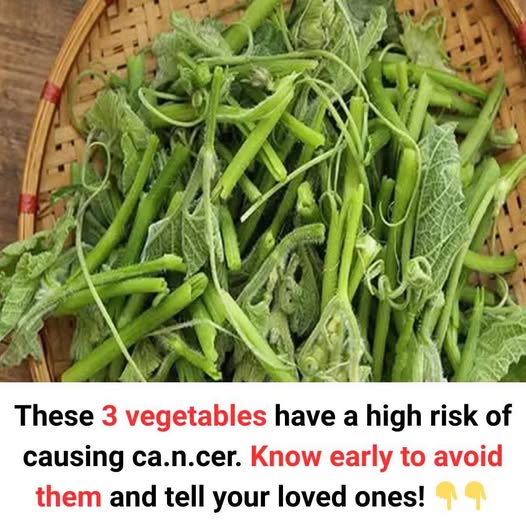
“These 3 vegetables cause cancer—avoid them now!”
“Stop eating these common veggies or risk your life!”
They grab attention. They spark fear. But more importantly—they often mislead.
While it’s true that certain food practices can increase cancer risk, the idea that specific vegetables are inherently dangerous is misleading and not supported by science. Let’s separate fact from fiction, understand real risks, and learn how to protect your family—with truth, not fear.
❌ The Viral Claim: “These 3 Vegetables Cause Cancer”
A widely shared social media post claims:
Vegetables with high pesticide residue
Pickled or preserved vegetables (in excess)
Rotten or moldy vegetables
And sometimes adds:
“Bitter gourd shoots are deadly!”
At first glance, this sounds serious—and worth sharing. But context matters. Not all risks are equal, and not every warning is accurate.
Let’s examine each one—based on science.
✅ 1. Vegetables with High Pesticide Residue — A Real Concern, But Manageable
Yes, some conventionally grown vegetables (like strawberries, spinach, and bell peppers) often appear on lists like the Environmental Working Group’s “Dirty Dozen.” These may carry higher levels of pesticide residues.
But here’s what the alarmist posts don’t tell you:
Washing helps: Rinsing under running water removes most surface pesticides.
Peeling works: For items like cucumbers or carrots, peeling reduces exposure.
Regulations exist: In most countries, pesticide levels in food are strictly monitored and kept below harmful thresholds.
The benefits outweigh the risks: Eating more vegetables—even with trace residues—is linked to lower cancer risk, not higher.
🌱 According to the World Health Organization (WHO), there is no conclusive evidence that consuming produce within legal pesticide limits increases cancer risk.
✅ Bottom Line: Don’t avoid vegetables over pesticide fears. Wash them well, buy organic when possible, but keep eating your greens.
✅ 2. Pickled or Preserved Vegetables (in Excess) — A Measured Risk
Fermented and pickled vegetables (like kimchi, sauerkraut, or salted cabbage) are staples in many cultures. However, high consumption of poorly prepared or industrially processed pickled vegetables has been linked to an increased risk of stomach and esophageal cancers—particularly in parts of Asia where diets are heavy in salt-preserved foods.
Why?
High salt content damages the stomach lining over time.
Some traditional preservation methods can lead to nitrates converting into carcinogenic nitrosamines.
Contamination during fermentation (if not done safely) can introduce harmful bacteria or molds.
However:
Moderate intake is safe—and fermented veggies contain beneficial probiotics.
Homemade or quality-controlled brands are far safer than mass-produced, high-salt versions.
🔬 The International Agency for Research on Cancer (IARC) classifies Chinese-style salted fish as carcinogenic—but not all pickled vegetables.
✅ Bottom Line: Enjoy pickles in moderation. Avoid excessive intake of salty, preserved vegetables, especially if they’re not properly fermented.
✅ 3. Rotten or Moldy Vegetables — Yes, Dangerous
This is the only claim with clear scientific backing: never eat rotten or moldy vegetables.
Mold can produce mycotoxins, such as aflatoxin and ochratoxin, which are:
see continuation on next page