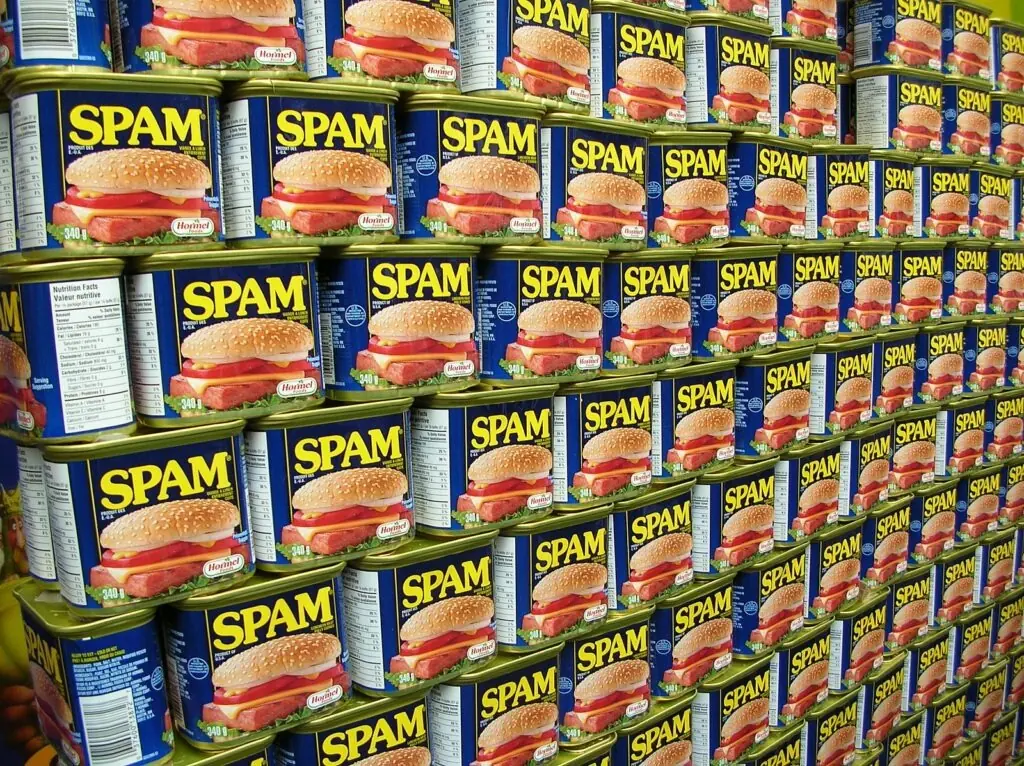
When people hear the word SPAM, some think of unwanted emails, while others picture the blue-and-yellow can that’s been sitting on grocery store shelves for generations. But behind this simple-looking product lies a fascinating journey through history, innovation, and culture.
The Origin of SPAM Meat
SPAM was first introduced in 1937 by Hormel Foods in Austin, Minnesota. At the time, the United States was recovering from the Great Depression, and there was a high demand for affordable, shelf-stable protein. SPAM met this need perfectly — a canned meat that could be stored for months without refrigeration, making it an accessible and convenient food for millions of households.
SPAM’s Role in World War II
Its popularity exploded during World War II. “It cemented its place in the culinary world during World War II, due to its ability to be stored for long periods of time,” says James Schend, food editor at Taste of Home. “It could be easily shipped around the world.” Soldiers relied on SPAM in the field, and it soon became a staple in many countries where U.S. troops were stationed.
Today, SPAM is sold in 44 countries with flavors tailored to local tastes — from Teriyaki in Japan to Jalapeño in the U.S. There are now 15 varieties in total, and whether you love it or not, you can’t deny its worldwide presence. Austin, Minnesota, even opened the SPAM Museum in 2016 to celebrate its rich history.

What Is SPAM Made Of?
see continuation on next page